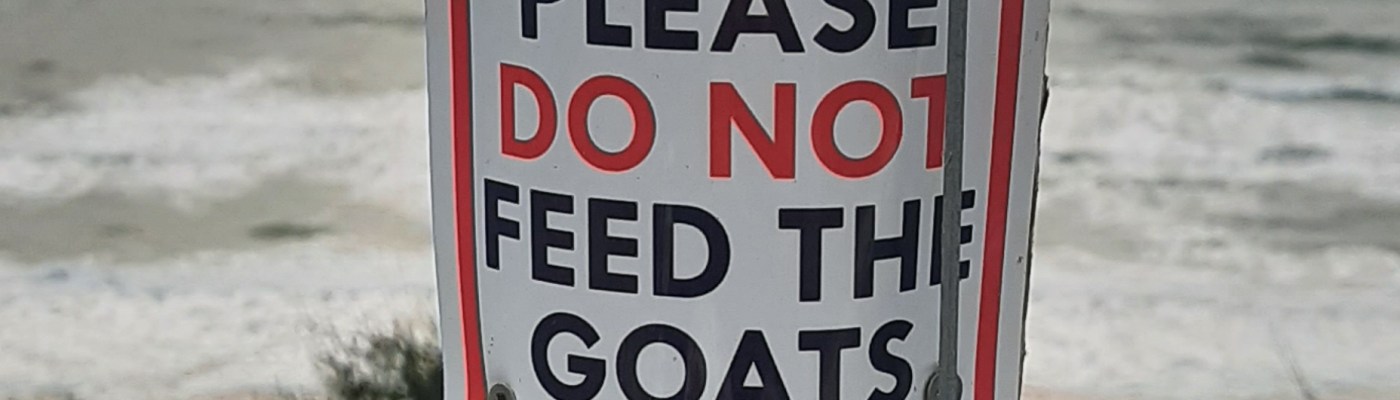
From fighting fires to restoring coastline biodiversity, goats really could be the greatest of all time.
The greatest of all time domesticated beasts, to combat the ecological challenges we have created that is. And this is great news for people packed islands like Britain and wildlife-depleted areas alike – which is, well most of the world nowadays.
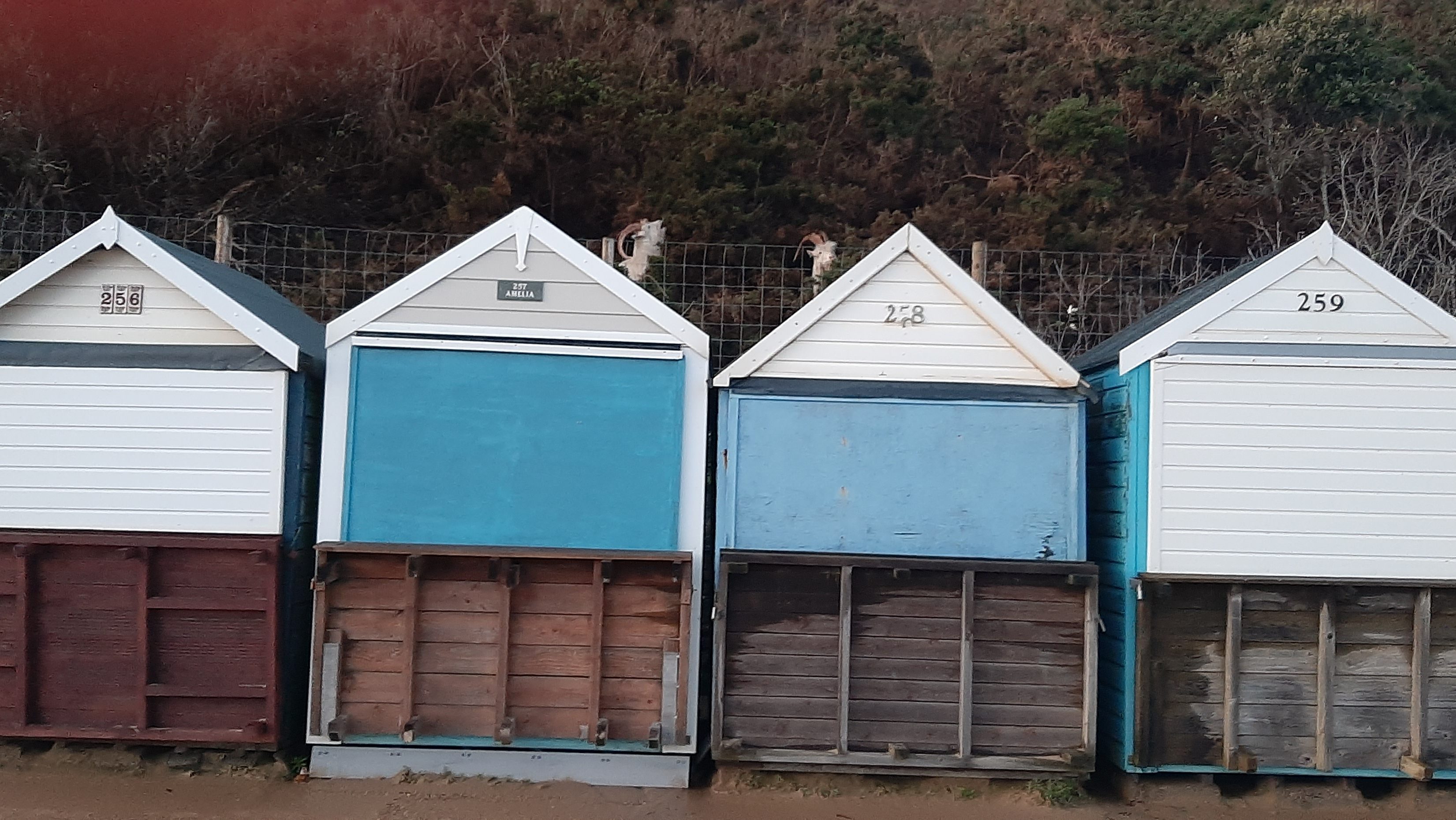
From goats cheekily grazing the steep cliff edges behind beach huts in the packed tourist beaches of Bournemouth (see photo below) to the hundred-strong armies of goats deployed to clear forest floor areas of California devastated by forest fires, the goat is one versatile animal.
I’ve loved goats since I first really saw them. Sipping chai in a cafe one early morning in Tanzania, a goat gang appeared suddenly on the wide potholed road before me, unfettered by humans, they glanced about before honing in on an area of interest, then they were off, jumping up and all over a pile of rusting cars with abandon and apparent glee.
They seemed to me to be, well not domesticated, they seemed to me to be the cats of the farm animals, independent of spirit and perfectly capable of looking out for themselves if need be. And this freedom of spirit is obvious in the goats munching above the Bournemouth beach huts, on the cliff slopes I would have trouble clinging to.
Unseasonal heat sparks dozens of wildfires in Spain
https://www.reuters.com/world/europe/unseasonal-heat-sparks-dozens-wildfires-spain-2022-10-28/
Forest fires have continued to rage in Spain this year well into late October, the lack of rains coupled with unseasonably high temperatures reaching 30 degrees, with high winds and plenty of available forest floor fuel have led to this, something which is likely to happen over and over again as weather patterns continue to make drier longer summers the norm. The Joint Research Centre of Europe reporting on the worsening trend in the scale and intensity of wildfires, notes that climate change is more noticeable each year.
Across mainland Europe generally, this has been one of the worst years for fires, and some 775,941 hectares have burned this year, which makes 2022 the second-largest area burnt on record, according to data from the European Union’s Joint Research Centre. The heat and dry seasons will in all likelihood get worse in the years to come, and while goats can’t resolve that, they can ensure there is less fuel for these fires. These wonderfully hardy, barely domesticated animals are being used to actively replace lost wild herbivores in forest fire-prone areas, the abandonment of land by people has simply left too much fuel on the forest floor.
Government figures indicate this year has been the worst year for wildfires in Spain with 260,000 hectares (642,500 acres) destroyed by blazes.
https://www.reuters.com/world/europe/unseasonal-heat-sparks-dozens-wildfires-spain-2022-10-28/
Goats are being used to clear vegetation in California – another area hitting worldwide headlines for forest fires, here one of the problems goats deal with effectively is a non-native plant which has increased the risk of forest fires, black mustard. Black mustard is non-native and thought to have been brought to California in the 1700s by Spanish Franciscan missionaries. The plants provide ample fuel for fires, growing tall and dying back to leave a rich dry fuel starter.
The California goats are a private herd of 100, under contract to the California government in a pilot project funded by Cal Fire since 2020, significantly they tackle the invasive plants, and can reach steep areas that are otherwise tricky to clear. This is one tool in the box in California, where fires continue to make global headlines.
These same strengths and tastes for non native vegtation, are being deployed on the coast of southern Britain, for very different reasons, here much smaller herds are being used to reduce the invasive non-native plants and increase biodiversity on the steep cliffs around Bournemouth. The local government-funded scheme has been practised in the area for nearly ten years, and is expanding across the coastline, from the initial agreement with a local goat farmer, where the area around Boscombe pier has already seen increases in butterflies, lizards and native grassland. The expansion of the experiment to Bournemouth Westcliff is expected to improve the habitat for native plants and animals to thrive including rare species such as Dartford warblers and sand lizards.
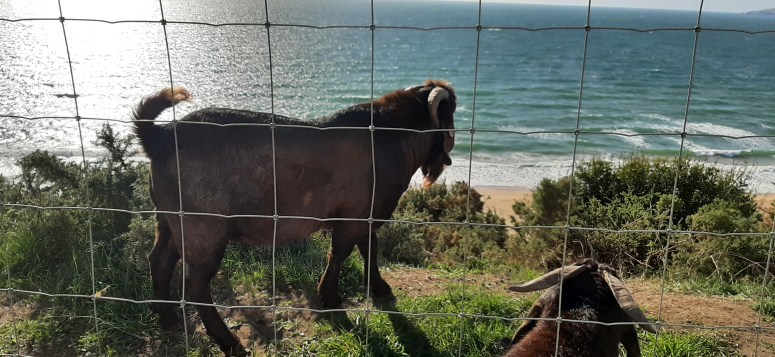
In Portugal, goats are also being deployed to fight forest fires, since the devastating fires have taken a huge toll in human life, 2019 saw 11,000 goats deployed in the north of Portugal. Forest fire season used to run from June to September in Portugal, ending with the first rains, but the rains are now later, the summers are hotter, and Autumn temperatures are providing perfect conditions for fires, extending the forest fire season.
The hotter drier conditions are coupled with greater fuel on the ground, as the other change is wholly man-made – the agro-pastoral system of Portugal has also broken down over the last 20 years. The sights of daily mixed herds moving through the montado system, which were common place when I first moved to Portugal are now a rarity rather than the norm.
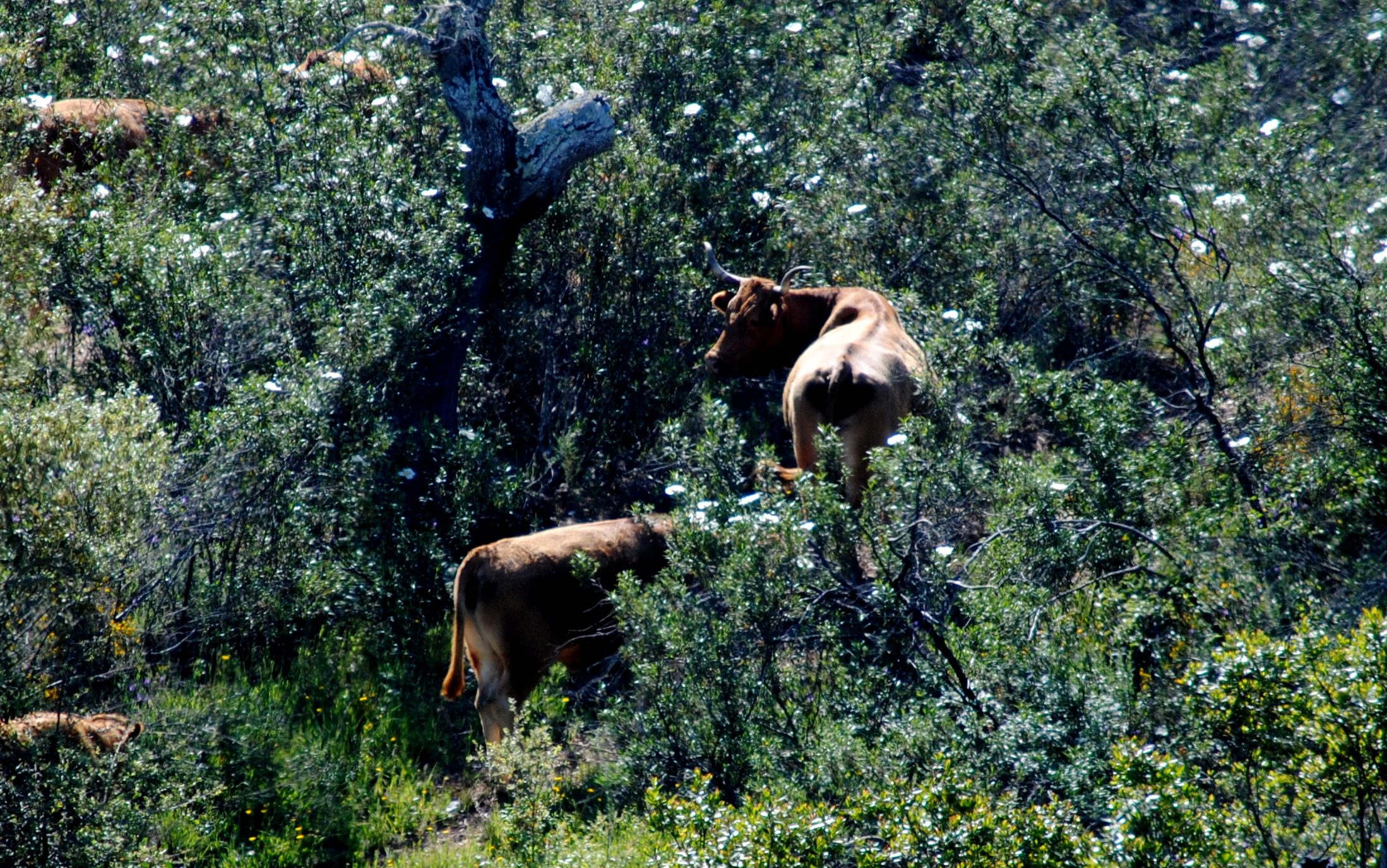
I would love to see community herds being the norm in the rural areas of Portugal, and with 50% of Portugal’s firefighting budget now going to fire prevention funding should not be an issue, but there is the question, does this fit with what people want here? Is there still a desire the live this lifestyle? The life of the shepherd, the kind of daily pastoralism that was commonplace a few short years ago is no longer a real part of the maintenance of this eco-system and its biodiversity, and their side action – the prevention of fires. However valuable the result of this vocation, it is not one which is a growth area for youth employment.
There areas of Portugal given over to the Rewilding project have seen in the north have seen no fires, with the combination of reintroduced herbivores and the vigilance of rangers. This is the same year fires raged through the ‘Mountains of the Stars’, Serra de Estrella, amongst other places. Perhaps the rewilding of these landscapes is more compatible with the current continuing drift of movement of people to urban centres, urban living with all of its access to modern conveniences definitely seems to be the preference for most people. And our wild spaces can recover in the absence of people, as long as the snares and fires people take into the wilderness of Portugal continue to be controlled effectively.
There is no doubt that the south coast of England which, I recently learnt was once a rich eco-system maintained by reindeer, elk and wild horses is in need of herbivores, Just look at the naturally diverse and abundant New Forest for a hint of the richness that was once the norm!
There are pockets of protected areas such as Henistbury Head, and an attempt to restore the relationship with herbivores has long been maintained with hardy sheep – the wonderfully named Cotswold Lions – and equally hardy cows, that these pockets survive adjacent to urban centres with the built environment is really amazing. And with the public and political will could be expanded upon.
In the meantime, the ‘domesticated’ herds of goats with their hardiness, agility and helpful foraging habits contained by careful fencing are a great way to reduce the harmful impacts of non native species and allow natural biodiversity to flourish. And the larger herds of goats in fire prone forests can also bridge the gap and reduce the threat of fires from Portugal to california.
The humble goat has an awful lot to offer us, surely making them the best named contender for GOAT.

