‘Mozambique is now land mine free’ and it is all thanks to trained rats.
This magical sentence was uttered in a documentary by a man holding a large African pouched rat on my TV and took me straight back to Africa 25 years ago, and I wept tears of complete joy. The BBC ‘Ingenious Animals’ segment on an amazing programme on land mine clearance with trained rats for Cambodia, a programme which involves training these rats to sniff out tiny traces of TNT with a peanut or banana reward system for a year. These African giant pouched rats weigh in at a kilo, heavy for a rat, but 1 kilo is too light to trigger a hidden landmine, a simple factor which gives this species a massive advantage over dogs trained for the same task. Trained African rats!
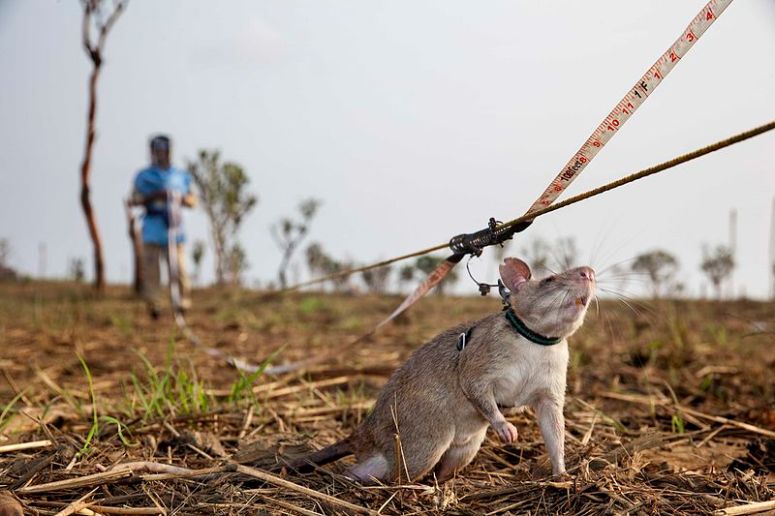
The rats in the documentary are on harnesses, quartering areas with suspected landmines, and lifting their noses at the trace of TNT, when their handler sees the signs of detection a click from him brings the rat for its’ reward, often a peanut, yes, these rats are saving lives for peanuts. Having helped to clear Mozambique of landmines, these rats are now moving into other former war zones.
Many years ago I was stunned out of a complacency I didn’t even know I had. Surrounded by like-minded people all working on permaculture projects, all learning new skills and sharing information. It was the answer to a question of mine ‘Tell me about your project?’ that shook me to the core and that answer was ‘We are very hopeful now, no-one has died or lost a limb in a year’. He continued ‘We are so lucky, we think this land is landmine free’ and the smiling face of the man who answered it is still clear as day to me.
How is your project going? I had asked, and in my complacency, I had expected the problems to be ones of drought, deforestation, the solutions to be tree planting, soil building, water catchment. Not landmines. I reeled in shock, at his harsh reality. The post-war problems of building his village community, growing food, supplying their own needs, from his land, the vile hidden threats lurking in the lush land of the Mozambique foothills. The obstacles to my urban British projects were so trivial in comparison a huge lump rose in my throat and I couldn’t speak. He carried on talking, full of enthusiasm and hope.
This man’s face has stayed with me for over twenty years, his raw enthusiasm for life, his optimism for the future so infectious, the obstacle to rebuilding Mozambique so enormous, mindless and indiscriminate, a constant lurking threat, and yet he overcame it every day. And I’ve often thought about him and his optimism.
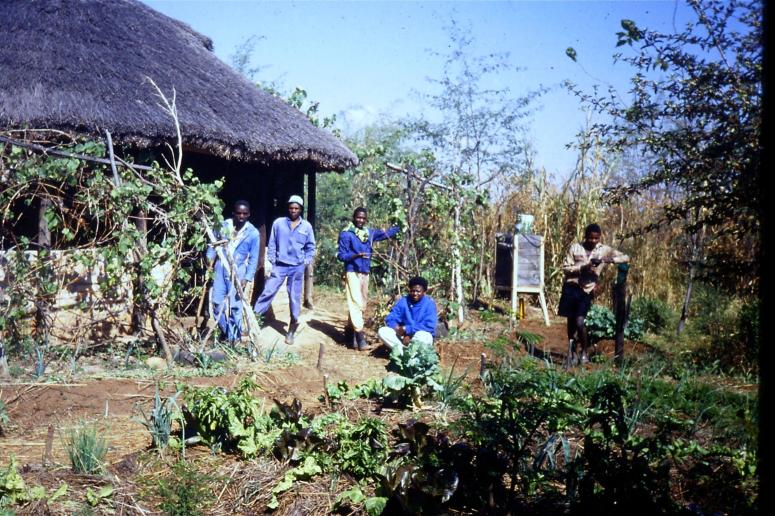
I was studying permaculture projects as part of my Independent Studies programme, in Africa. I was staying near a large permaculture farm in Zimbabwe and I was feeling a little depressed at the whiteness of the farm-owners, the huge disparity between whites and blacks was more obvious here than I had seen anywhere else, colonialism seemed alive and well here, the white European influence here was like nothing I had seen in East Africa. I arrived in Harare to see a marching brass band on a dazzling irrigated green lawn, black children begging at the windows of whites in their expensive 4×4’s, to feel unwelcome at bus stations in a way I had never felt in Tanzania, Uganda, Kenya. This mazungu was very uncomfortable in her skin, I couldn’t wait to pick up my backpack and get back to East Africa.
First World problems. Third World Problems.
 Siobhan Mitchell