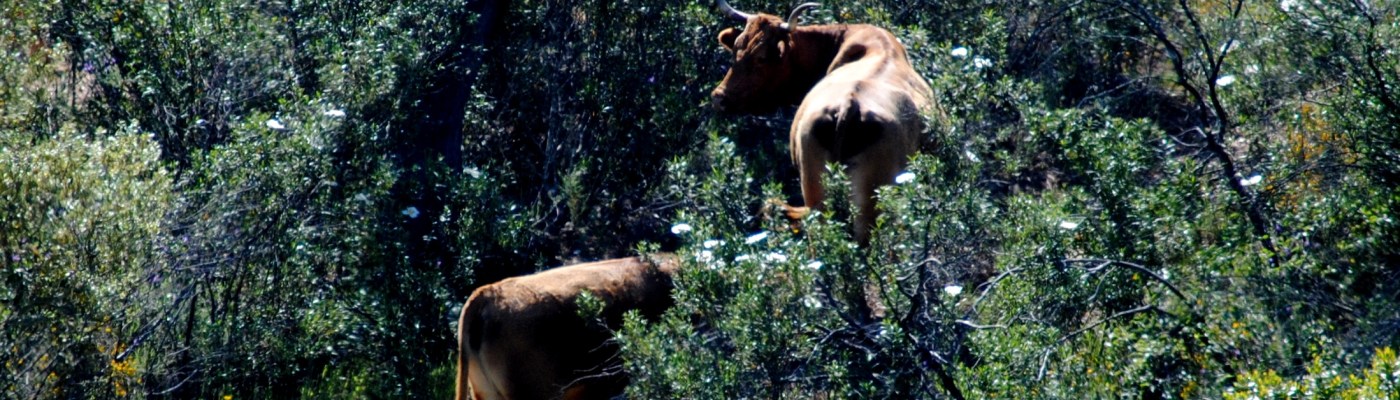

I cannot see the cows for the trees.
Literally.
I know they are out there, because the deep sound of the large cow bells softly betrays their presence, swinging and chiming with the slow rhythmic tread of huge russet cows, I know they are out there, but they are hidden by the thick cork forest, as they tread unhurriedly home, following centuries old paths between trees of cork oak and shrubs of the strawberry tree.
They will be herded by the wiry Antonio, who walks them to my neighbours abandoned wells, and back to his own farm, crossing three hill ranges to get there. The sound triggers happy memories. ‘When the cows come home’ – a phrase which meant more when it subverted the intended meaning and was a daily occurrence dovetailing the start and end of the days when I first came to these Alentejo hills in the late ‘90’s.
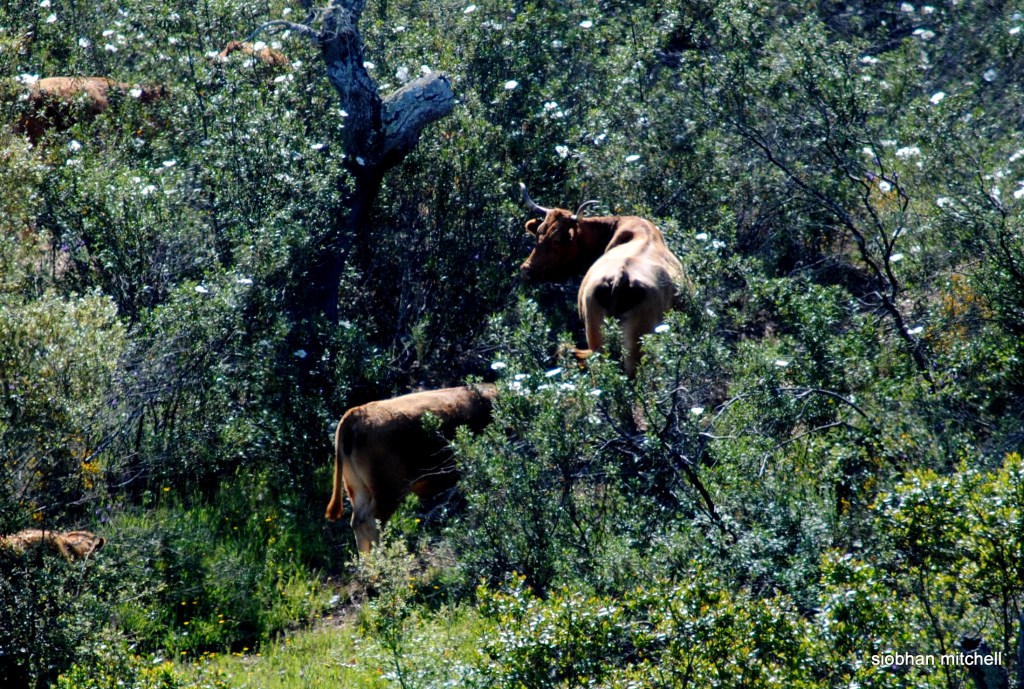
Back then, these mighty oxen ploughed the valley gardens once a year and were part of my neighbours large mixed herd of cows, goats and sheep, they were taken out to the valley each day by Fernando. Such a practise is now uncommon here, the land has been further depopulated of its traditional farmers, and the few young people born here continue to drift away to urban areas. The daily practise of shepherding these herds was one that maintained the montado as one of the most diverse ecosytems in the world and one that preserved the mosaic of forest, scrub and grassland that I recently read that imitates the natural role of large herbivores in this vast European landscape.
Succession. Once taken for granted, and certainly what I was taught in my own Ecology degree, seems to be a nonsense, the progression to full dense canopied forest is based on an oversight based on our knowledge of the European landscape we have long since overkilled. And with this lost knowledge we have a complete ignorance of the role of large herbivores in our landscapes that seems even more important than the missing large predators that we have also largely eliminated. This ignorance is being banished by the research of rewilding science, by combining the knowledge of archaeology and plant science the latest scientific techniques are knitting together a fuller ancient natural history.
One of these integral jigsaw pieces of this ancient puzzle is grasses, the extent and therefore importance of which have been overlooked simply because their ancient pollen is more fragile and persists for less time than trees and other woody plants, giving us a skewed view of ancient ecology in our core samples.
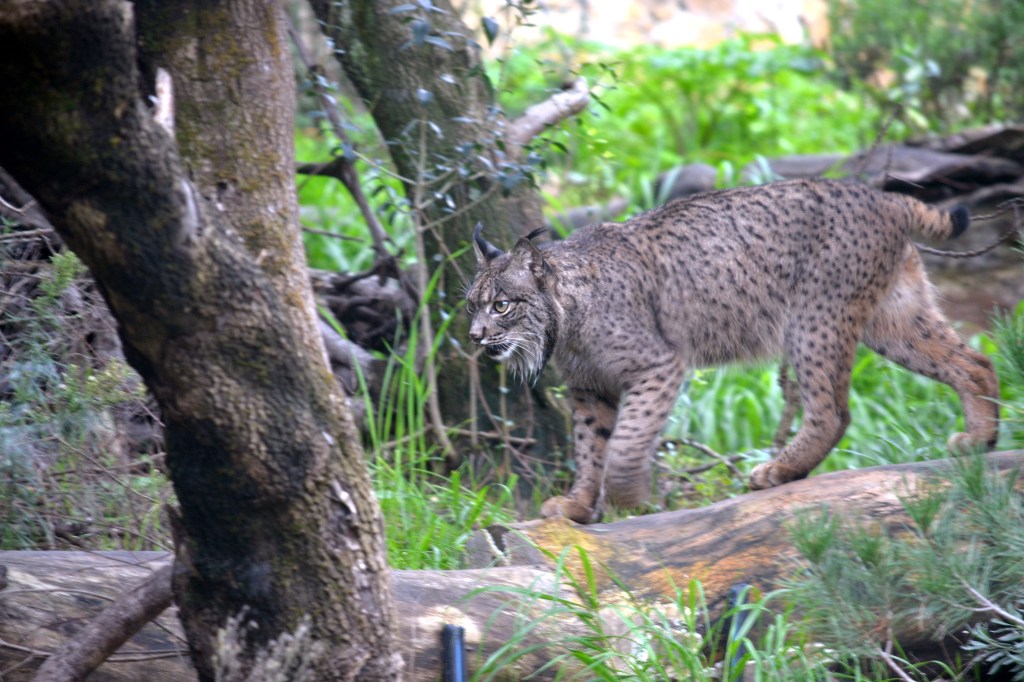
We are blinkered by only having a snapshot of the world around us, in only accepting what we see, a quick succession of scrub to forest is easy to observe, and in so doing we accept only what we see even where that is a fragment of former abundance. Forest animals are limited, but it is in our ancient forests that some of these rarer European mammals maintain a presence, bears, wolves, lynx and this ‘proves’ the natural succession. But where mega fauna have been reintroduced a dynamic change can start to be observed.
The manmade ecosystem – of the montado (known as dehesa in Spain) is richer in biodiversity by far, this copies the disrupted mosaic of grassland, scrubland and forest. And this landscape is dependent on large disrupters, on grazers, and on change. It is far from static, and it thrives on this. The farming systems of Spain and Portugal simply replicated the ancient landscape with domesticated animals, with transhumanence, with semi wild cows, horses and pigs, or by herding diverse browsers and grazers, these extensive farming maintained those grasslands.
The importance of seasonal crops of strawberry tree fruit maintained their importance of this shrub in the landscape, preserving cover for ambush predators like the Iberian lynx. The crops of acorns from holm oak trees for fattening pigs, maintained them in the human landscape. And of course, cork oak bark, stripped every 9-10 years was the most important economic crop of them all.
This is the landscape I see from my rammed earth cottage, as I keep looking for the russet cows to appear, as they steadily and assuredly climb the ancient walkways, as they pause in the space between the trees to graze. They take their time, they nuzzle their young, the sun gleams off their hides. There is something timeless here, something that ‘feels right’ as I watch them now, it is clear they belong. They are not just a part of this landscape; they make this landscape.
Antonio is too, his ‘footprint’ is minimal, and he continues to gather from this montado ecosystem, he gathers rushes and reeds for the chair seats and the baskets he weaves, he gathers mushrooms and strawberry tree berries, yet as he walks these hills with his cows he is an ever rarer sight here.
My next Portuguese neighbours have moved to the outskirts of the village, with access to mains water and electricity, as ‘day’ farmers they have shed their mixed herds, and now simply raise sheep, they bring them to the grassland and open olive grove and these sheep mostly maintain this meadow, but the lack of goat grazing shows in the sudden suffocating mimosa stands. Land is increasingly dug over excessively with machines. Eucalyptus plantations continue to choke waterways and increase the risk of fires.
Goats are less easy to handle part time, so are seen even less frequently than sheep, though after the fires of 2017 and 2018 some councils are using them to clear the ground as natural firebreakers. They do raise pigs, though wild boar are abundant and this niche is well occupied, I miss my first neighbours walks with his pigs in the Autumn. I miss his laugh, his ever readiness for a joke, I miss setting the time by the angle of the tilt of his hat.
These may be a people who survived the poverty of the Portuguese fascist dictatorship, but they knew how to live well, to share what they had, they knew this land and they left her richer for their activity.
The cows wander out of sight over the brow of the hill, a mother lowing to her tardy calf, pausing in her leisurely stroll. And I see the cows within the trees. An ancient dynamic force shaping their world, calmly, steadily, endlessly.
 Siobhan Mitchell
One thought on “When you can’t see the cows for the trees”