
Rewilding – Part 1 What is it?
Does it mean returning wolves, lynx, and bison or is it the sudden welcomed splash of colour brought to us by the wildflowers by the side of the road that Councils all across Britain are introducing?
Rewilding has become the catchphrase for a huge range of ideas and practical projects around the world. And I for one, am very ready to embrace all that this brings, I love the idea of a fully rewilded landscape in Britain, I long for a British countryside buzzing with wondrous diversity, and yes I would love to see wolves, lynx, and other missing species enjoying the success that beavers are bringing back to the British countryside. But I also am just as happy to see and hear those wild patches springing up in people’s gardens.
I am more passionate about rewilding than I have been about anything since I first heard of permaculture back in 1988. But when I mention rewilding, I realise that while it is something most people have heard of, there are very different ideas of what it is, which is also very similar to when I enthusiastically talked about permaculture back in the ’80s.
So, what is rewilding?
Rewilding is a new, and still developing science, a new conservation approach which therefore is still evolving in its definition, and therefore means different things to different people. For example, the book “Rewilding” describes it as “the radical new science of ecological recovery”, but what does that even mean? Is it science or a new conservation methodology? It could even be described as a philosophy, as it contains the radical idea that actually, maybe, we are not the earth’s best stewards.
In Britain, we manage almost every square centimeter of land, from country estates to gardens, from farms to allotments, from parks to school grounds. And the result of all this management is largely disastrous for our wildlife; we live in one of the most nature-depleted countries in the world. So how we live, and how we manage this green and pleasant land needs to change. And rewilding projects are part of the response to this.
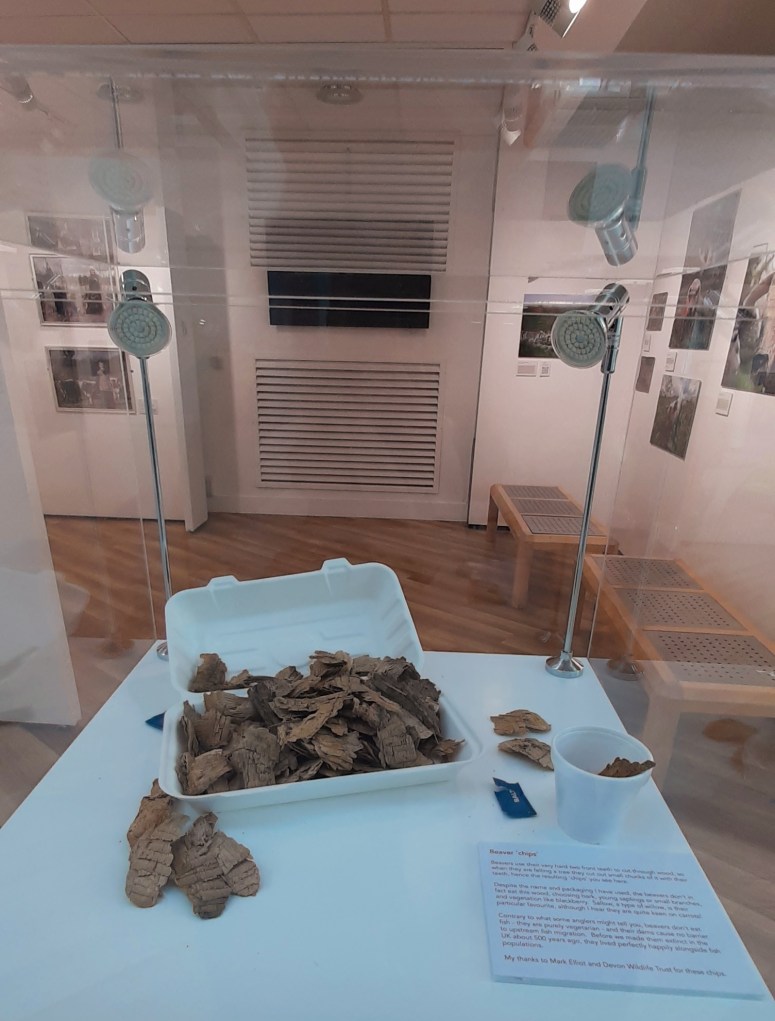
It is described as “What if we just leave it?” The title of a photographic exhibition about rewilding I recently visited in Bournemouth’s University. The exhibition is a lovely overview of current rewilding projects in Britain, following the people and the animals involved, with a portion of beaver chips to greet you. Though none of the projects exhibited have been achieved by doing nothing, they have all introduced animals and wildlife to create – or recreate a balance that does look after itself. From farm animals that retain their wild nature, to reintroductions from storks to beavers, they all have at their base, the radical idea that ‘nature’ knows best.
However we move forward, rewilding is here to stay, a wonderfully positive and life-affirming tool in the box tackling climate change, fires, and floods, something we should embrace and not fear because with a rewilded landscape comes hope.
 Siobhan Mitchell